The uPGRADE-next project aims to complete the development and testing phase, carry out the launch, and execute the first gravimetric mission ever performed by a nanosatellite. The satellite is virtually ready, a result of the previous uPGRADE project (P2020, No. 45927) developed in collaboration with the Center for Space Research at the University of Texas at Austin—a world leader in this field.
Consortium and Team Contributions
The team assembled to execute the proposed project comprises the key partners from the preceding project (uPGRADE) including the industrial lead Spin.Works, a contribution from the University of Texas at Austin (unfunded) also secured. The sole objective of this contribution from UT Austin is to enhance the project’s scientific component (gravimetric data collection)—specifically, to demonstrate the applicability of the MEMS-based High Accuracy Accelerometer technology developed by INL in a real-world context and to prepare for a potential future nanosatellite constellation, as originally planned for the uPGRADE project. Our partner ISQ will support the team by carrying out payload testing and qualification at their facilities in Lisboa and Castelo Branco.
Satellite Architecture
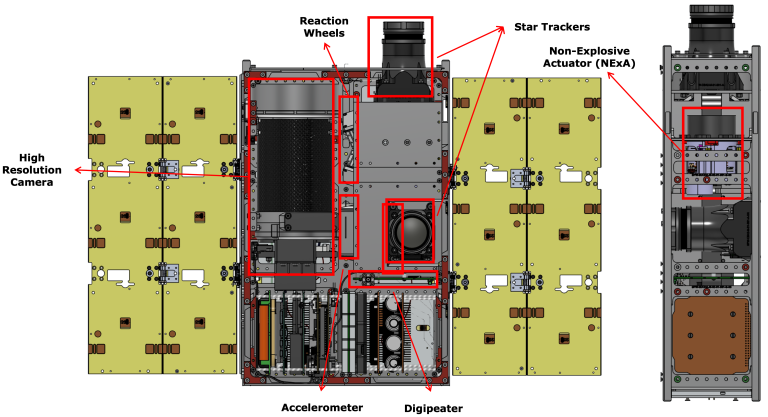
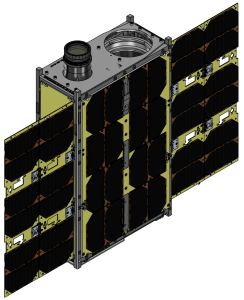
The uPGRADE-next architecture has been slightly modified comparing to uPGRADE. The structure now includes deployable solar panels in order to ensure enough power generation for the revised payload suite. Otherwise the structure remains highly rigid except for the deployable UHF antenna, which has been separately tested to guarantee sufficient rigidity and avoid perturbing accelerometer measurements.
The avionics bay comprises the OBC, power conditioning and distribution unit, communications board, and the processing board required to operate the non-explosive actuator, the high-resolution camera and the dual star tracker.
Other devices such as the S-Band antenna, GPS antenna and ADCS components (magnetometer + magnetorquer, sun sensors, IMU and inertia wheels) are placed such as to ensure a suitable field-of-view and avoid interference with the sensitive devices responsible for the science mission (GPS sensor, accelerometer and star tracker optical heads).
An additional part included in the 6U cubesat is a digipeater, that will ensure a constant, beacon-likebroadcast of key satellite data detectable on the ground via UHF signals.
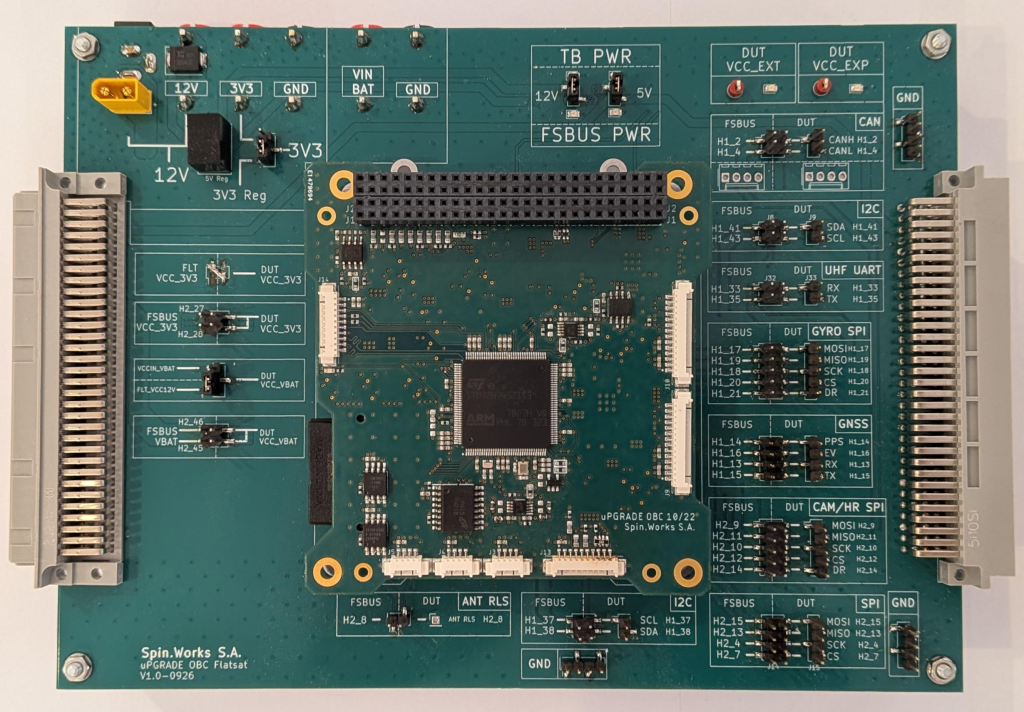
On Board Computer
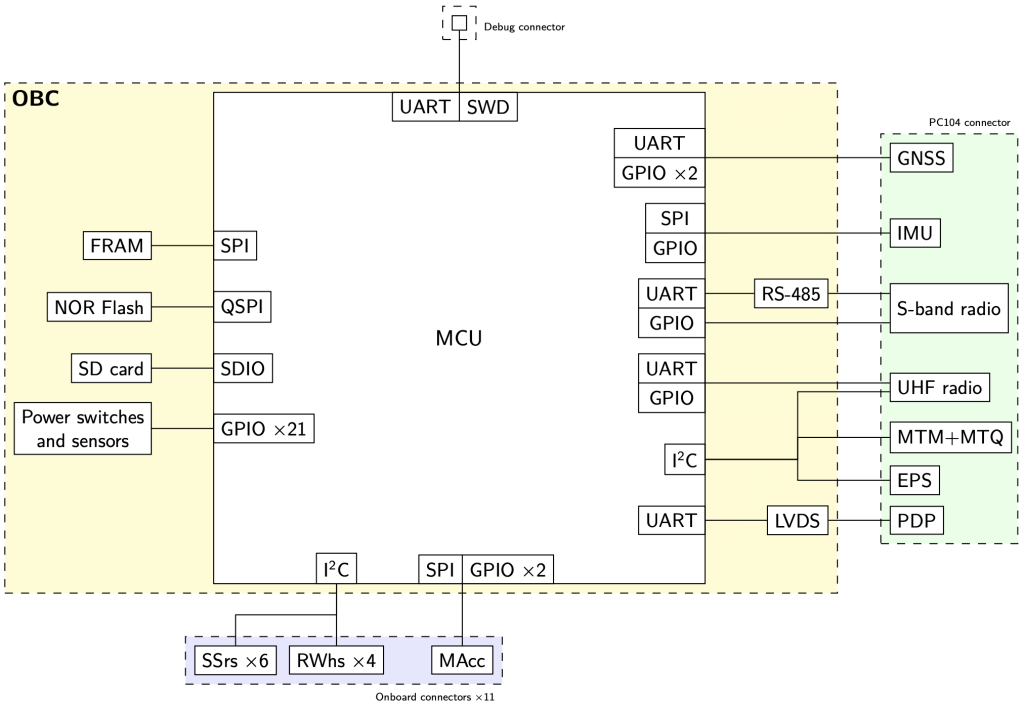
The mission’s On Board Computer has been developed at Spin.Works and shares many of the functionalities and interfaces with another project (VIRIATO). The main processing device is an STM32H7-series with an ARM-Cortex-M4/M7 processor that provides high performance (about 1000DMIPS) at low power consumption (300mW avg, 1W peak), along with ample connectivity (I2C, UART, Quad SPI, CAN, USB, Ethernet) and storage (FRAM, NOR Flash and SD Card).
The OBC board connects to the Cubesat’s PC-104 stack and weighs g. It is effectively the brain of the mission, ensuring that all on board operations are executed just as planned, including the configuration, data handling and monitoring of each device in the spacecraft throughout the mission.
A very significant portion of the project’s development effort is focused on this task. Following a re-evaluation of the onboard software implementation plan, which included changing the operating system and redesigning the architecture of the base modules (drivers) to operate the onboard computer’s various external interfaces (specifically utilizing UART, SPI, and I2C interfaces with multiple components)—and after implementing the processes outlined in the next section, the actual implementation of the software was carried out.
The re-development of the onboard software was initially focused on enabling robust use of the SPI, I2C, and UART ports required to control all the satellite’s components.
Software
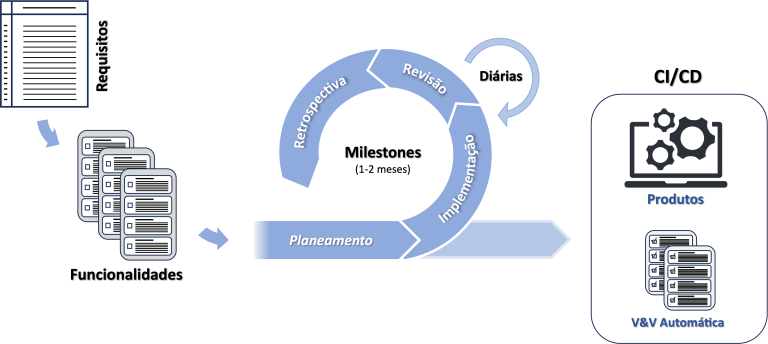
Since 2023, Spin.Works has been implementing a CI/CD (Continuous Integration/Continuous Deployment) methodology for all software components developed at the company; the uPGRADE-next project differs only in that the original project involved onboard software that required redesigning to align with these processes. Given the importance of this methodology for the reliability of embedded software—a critical factor in realizing a system as vital and complex as CubeSat control, intended to pave the way for more ambitious projects—the implementation of systematic (and in some cases, automated) processes for development, testing, verification, and validation was fully justified.
This methodology was also applied to the onboard software for all payloads integrated into the mission, as well as to the associated tasks of testing, verification, and incremental validation—ranging from individual functionalities to integration testing of the complete codebase. Notably, there were prior examples of firmware developed using this methodology; a key highlight is Spin.Works’ contribution to the New Space Portugal Agenda: a high-resolution dual hyperspectral camera operating in the VNIR and SWIR bands, for which the onboard software was developed from scratch using the Agile method combined with CI/CD.
Payload
The payload on the original uPGRADE cubesat comprised three sensor types: a GNSS receiver (along with the respective antenna), a dual-head Star Tracker, and a high-accuracy accelerometer.
Two payloads were added to the previous iteration of the satellite: a high-resolution camera with active line-of-sight control, and a non-explosive actuator. In addition, and as noted above, a software maturation task was included in uPGRADE-next for the onboard software of each payload (particularly for the star trackers and the high-resolution camera), as well as the construction, integration, testing, verification, and validation of each payload within the context of our CubeSat mission.
High Accuracy Accelerometer
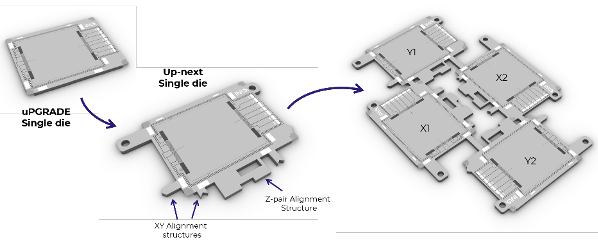
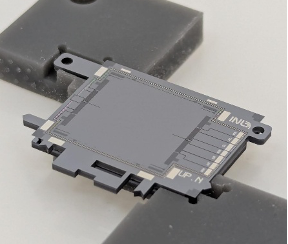
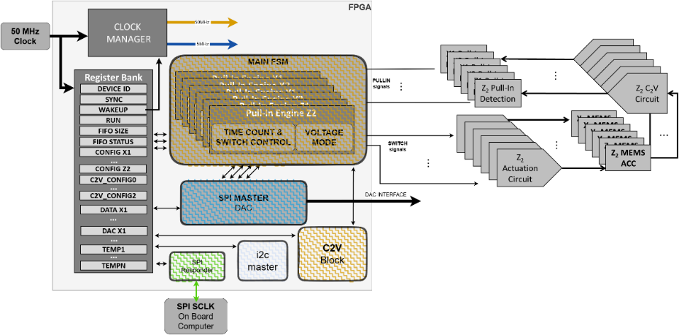
Developed at INL and University of Minho, this accelerometer attempts to use MEMS technology to measure nm/s2-level accelerations. This is comparable with the sensitivity of seismometers, which means that it is difficult to test it on the ground, even under laboratory conditions.
Given its extreme sensitivity, the device is far more suited for operating in orbit – or on the surface of other planetary and small bodies as a seismometer.
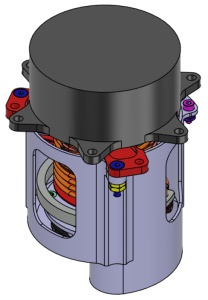
The package enclosing the accelerometers and keeping in place the different components has been developed at Spin.Works.